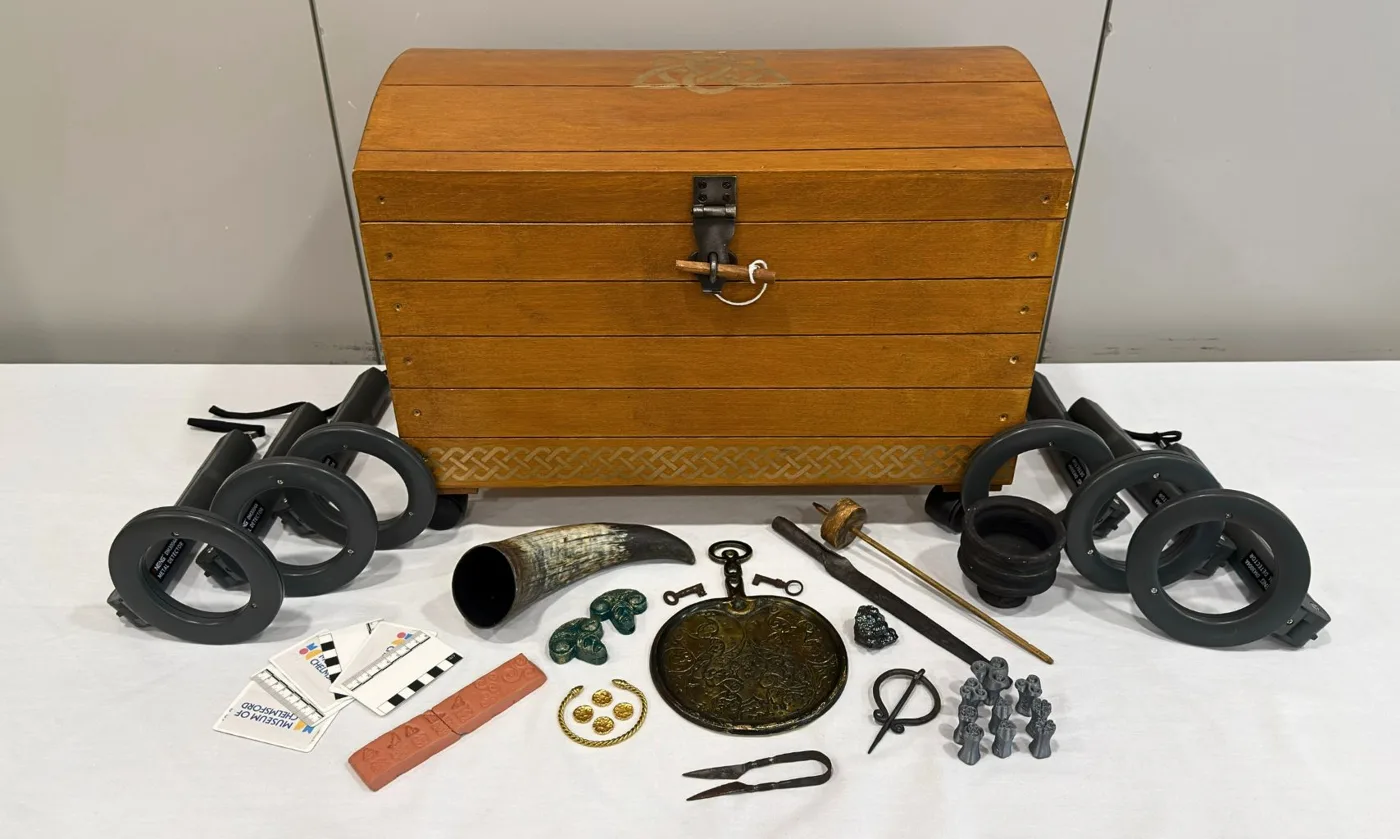

Schools can now hire a Museum of Chelmsford box built around the Great Baddow Hoard for £35 a half term. Beehive Lane pupils helped design its lessons.
Primary schools can now borrow a box of lessons built around the Great Baddow Hoard, the Iron Age gold coins found in the village in 2020. The Museum of Chelmsford made it with pupils and teachers at Beehive Lane Community Primary School in Great Baddow.
The museum charges £35 a box for each half term (Museum of Chelmsford). The next free slot for the Baddow box is from January 2027. Beehive Lane was the first school to hire it, from September to October 2026 (Chelmsford City Council).
What is in the box
It is written for Key Stage Two, so roughly ages seven to 11. The council says it holds 21 activities, arranged as eight lessons. Teachers can run them one at a time or put them together as a single Iron Age Day.
The museum’s own list of contents includes:
- replica Iron Age coins
- mini metal detectors and “metal detecting finds” to search for
- archaeology tools and a class set of hi-viz jackets
- a mat showing how the hoard lay in the ground
- a fabric timeline with a Celtic settlement mat, peg dolls and replica objects
- clay stamps and example clay vessels
- board games and Top Trumps cards, with templates to make your own
Teacher notes, worksheets and digital resources come with it (Museum of Chelmsford). Any school can borrow a box, from anywhere, as long as it can collect it from the museum and bring it back.
How Beehive Lane shaped it
The museum worked with creative practitioner Hannelore Smith. In the autumn term of 2025 they ran several workshops at Beehive Lane, testing activities with the children. Pupils made clay vessels, tried a mini dig and designed their own coins. Then they voted for the activities they liked best, and teachers advised on turning each one into a usable lesson.
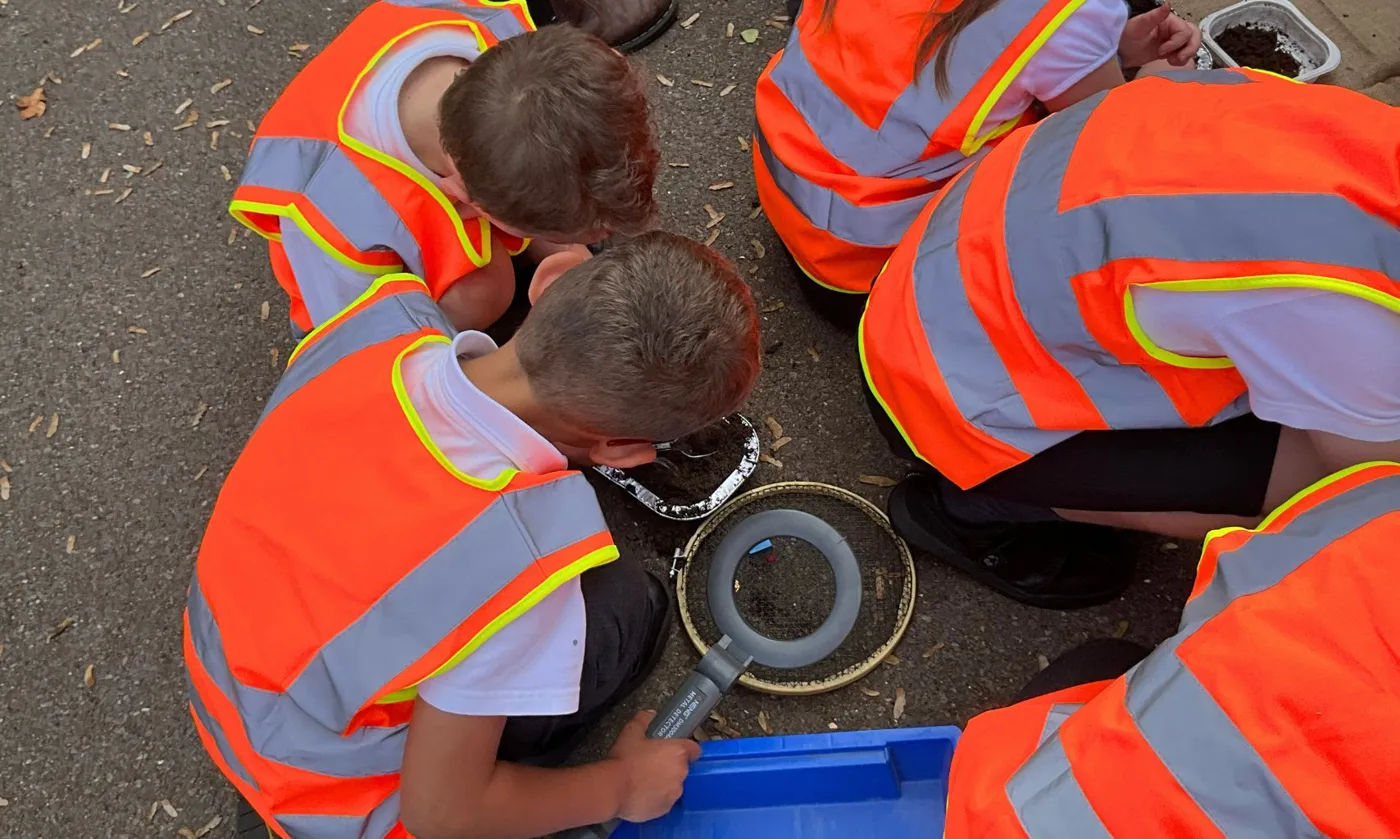
Westlands Community Primary School and Moulsham Junior School tested it again in early 2026, before the museum began lending it out.
A class of Year 3 pupils from Beehive Lane were also the first members of the public to see the hoard itself, in October 2025, the council says.
Sally Baker, a teacher at the school, said the box “brought history to life for our pupils in a way that books alone cannot”. She said pupils became “highly invested in discovering more about the history of Great Baddow and the story of the Great Baddow Coin Hoard.”
Councillor Jennie Lardge, the council’s Cabinet Member for Culture and Leisure, said the box would help children “understand how their own community fits into the bigger historical picture.”
The work is part of Timeless Treasures, a project paid for by the National Lottery Heritage Fund.
The hoard
The museum calls the Great Baddow Hoard the largest recorded hoard of Iron Age gold coins ever found in Britain. Its collection page puts it at 933 coins, dated to between 60 and 20 BC (Museum of Chelmsford). The council’s announcement gives 935. We have used the museum’s own figure.
The coins are on show in the Timeless Treasures exhibition until 11 April 2027. It is free with museum entry (Museum of Chelmsford). The museum says it will be closed all day on Thursday 19 November for maintenance.
We wrote about how the hoard was found and bought, and the museum’s vote on its best objects, in our earlier story.
What it means for you
- Teachers: the box costs £35 for a half term and the next slot opens in January 2027. Book it through the museum’s learning resources page, which also lists Romans and natural history boxes on the same terms.
- Parents: if your child’s school is studying the Stone Age to the Iron Age, this is a local resource worth mentioning to the class teacher.
- Everyone else: the hoard is on display in Oaklands Park until April, and the exhibition is free once you have paid museum admission.
Have your say