
There were an estimated 2,267 antibiotic-resistant bloodstream infections in the East of England in 2025. NHS Essex is asking people not to demand antibiotics.
People in Chelmsford are being asked not to go to their GP expecting antibiotics for a cold or flu. NHS Essex says too many infections in the region no longer respond to them.
There were an estimated 2,267 antibiotic-resistant bloodstream infections in the East of England in 2025. NHS Essex released the figure for World Antimicrobial Resistance Awareness Week, which runs from 18 to 24 November.
Overview
- Antibiotics only work against bacteria. Colds, flu and COVID-19 are caused by viruses, and antibiotics do not work on them.
- If you are prescribed antibiotics, take them exactly as prescribed. Do not save them or share them.
- Take any leftover antibiotics to a pharmacist to be disposed of.
- Anyone eligible for a flu, COVID-19 or RSV vaccine should arrange it.
What the figures show
Antibiotic resistance is when antibiotics become less effective, or stop working entirely, against infections caused by bacteria.
The UK Health Security Agency (UKHSA) reported last week that England averaged 406 antibiotic-resistant infections a week in 2025. The East of England estimate for the year was 2,267.
These figures count only bloodstream infections, known as bacteraemia. They are often serious and need clinical treatment. Blood samples are used because they give reliable evidence of a serious infection. NHS Essex says the total number of resistant infections will be higher.
The figures come from the UKHSA’s English Surveillance Programme for Antimicrobial Utilisation and Resistance, known as ESPAUR.
Dr Matthew Sweeting, Executive Medical Director at NHS Essex, called the East of England figure “very concerning”.
“Antibiotics are an undeniably essential part of medicine,” he said. “They play a vital part in fighting and preventing infections and are used more widely than you might think.
“They treat serious bacterial infections such as pneumonia, meningitis and sepsis, but are also important for cancer treatment, serious injuries and surgeries carried out in hospitals every day. It is hard to imagine a world where we can no longer rely on their effectiveness.”
How much the region uses
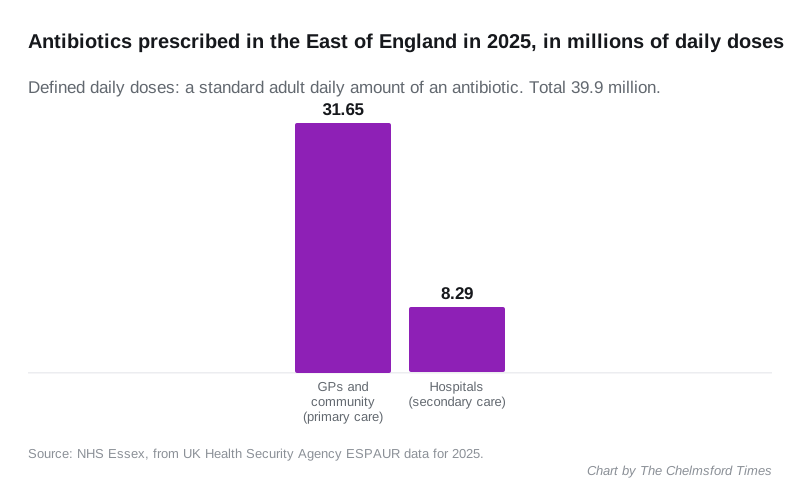
Antibiotic use in the East of England last year came to 39,932,383 defined daily doses. A defined daily dose is a standard daily amount of an antibiotic, based on what an adult would usually take to treat an infection. It does not count tablets, prescriptions or courses.
- Primary care, such as GP surgeries: 31,645,426 daily doses
- Secondary care, meaning hospitals: 8,286,957 daily doses
- Every day, about 17 daily doses (16.636) were prescribed for every 1,000 people in the region
Why overuse matters
One cause of rising resistance is antibiotics being used wrongly or too often. When they are taken without need, bacteria in the body that are not making a person ill can become resistant. Those resistant bacteria can then spread to other people and cause infections that are harder to treat.
“We all have a role to play in halting the growth of antibiotic resistance,” Dr Sweeting said. “Please don’t go to your GP or other health professional expecting or demanding antibiotics. Instead, follow tried and tested advice for easing symptoms of common illnesses like colds and flu. You can visit the NHS website for further advice or can ask your pharmacist.
“If you are prescribed antibiotics, please take them exactly as prescribed. Do not save them for later or share them with anyone else. If you do have any leftover antibiotics, take them to your pharmacist to dispose of them properly. And everyone who is eligible for vaccinations like flu, COVID-19 or RSV should make sure to arrange their vaccine.
“If we all work towards protecting our antibiotics, we can make sure that we can continue to use them when they are needed.”
Stopping germs spreading
NHS Essex says good hygiene also helps stop bacteria and other microbes spreading:
- wash your hands regularly
- cover coughs and sneezes with a tissue, then throw it away
- stay at home if you are unwell
People can also pledge how they will help protect antibiotics by signing up as an Antibiotic Guardian at antibioticguardian.com.
Source: NHS Essex.
Have your say