
In 1779 a preserved body was found in liquid under St John the Baptist, Danbury, and one witness with no sense of smell tasted it. Who was the knight?
Richard Clements, an Essex historical researcher who writes as The History Alchemist, joins The Chelmsford Times with a monthly feature on the lesser-known history of Chelmsford and the villages around it. This is the first.
In 1779, workmen digging a grave inside an Essex village church made a rather extraordinary discovery. Beneath the stone floor lay a coffin containing the remarkably preserved body of a man who may have been dead for centuries.
But perhaps the strangest part of the story is that somebody apparently decided to taste the liquid in which the body was preserved.
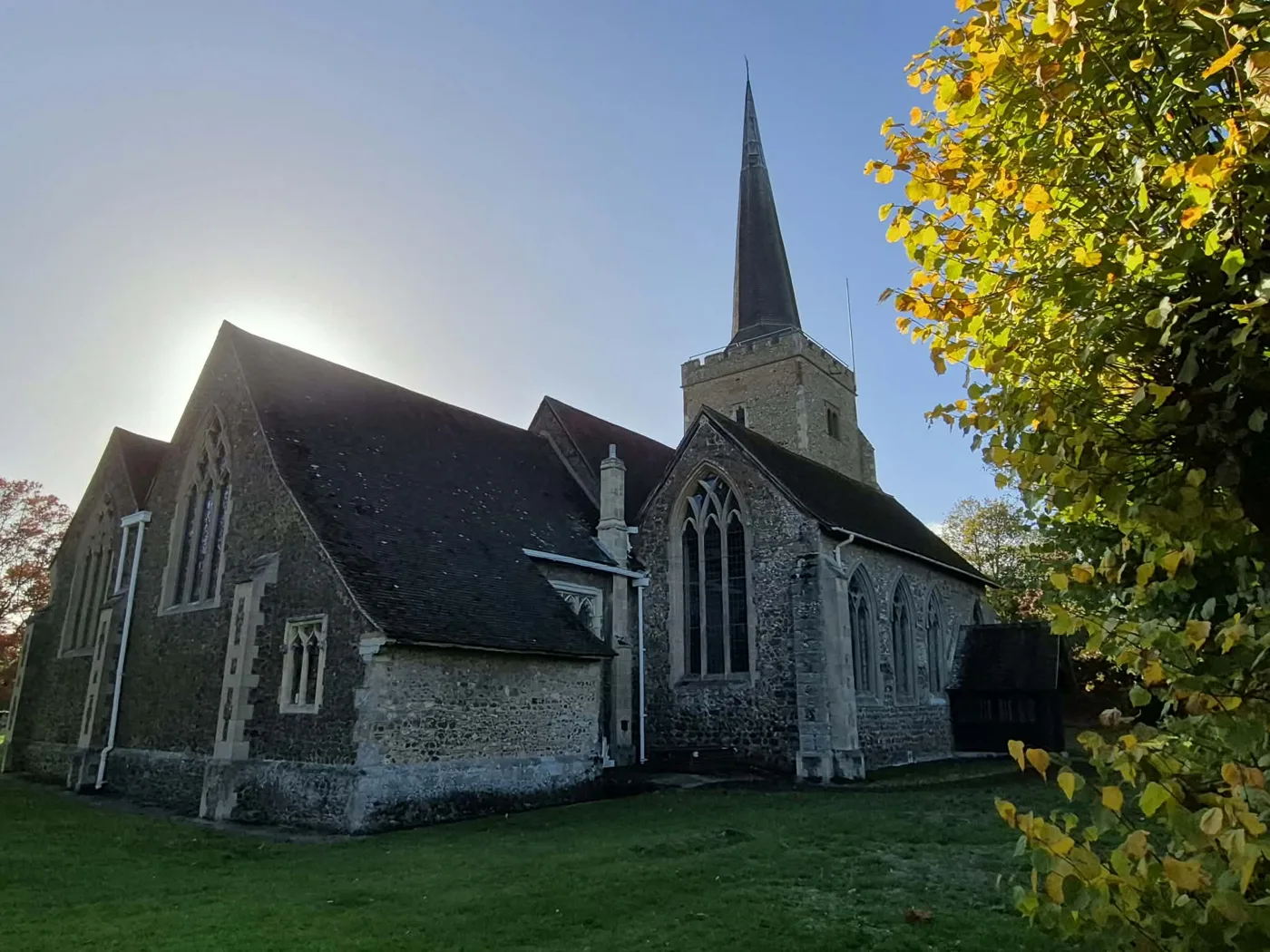
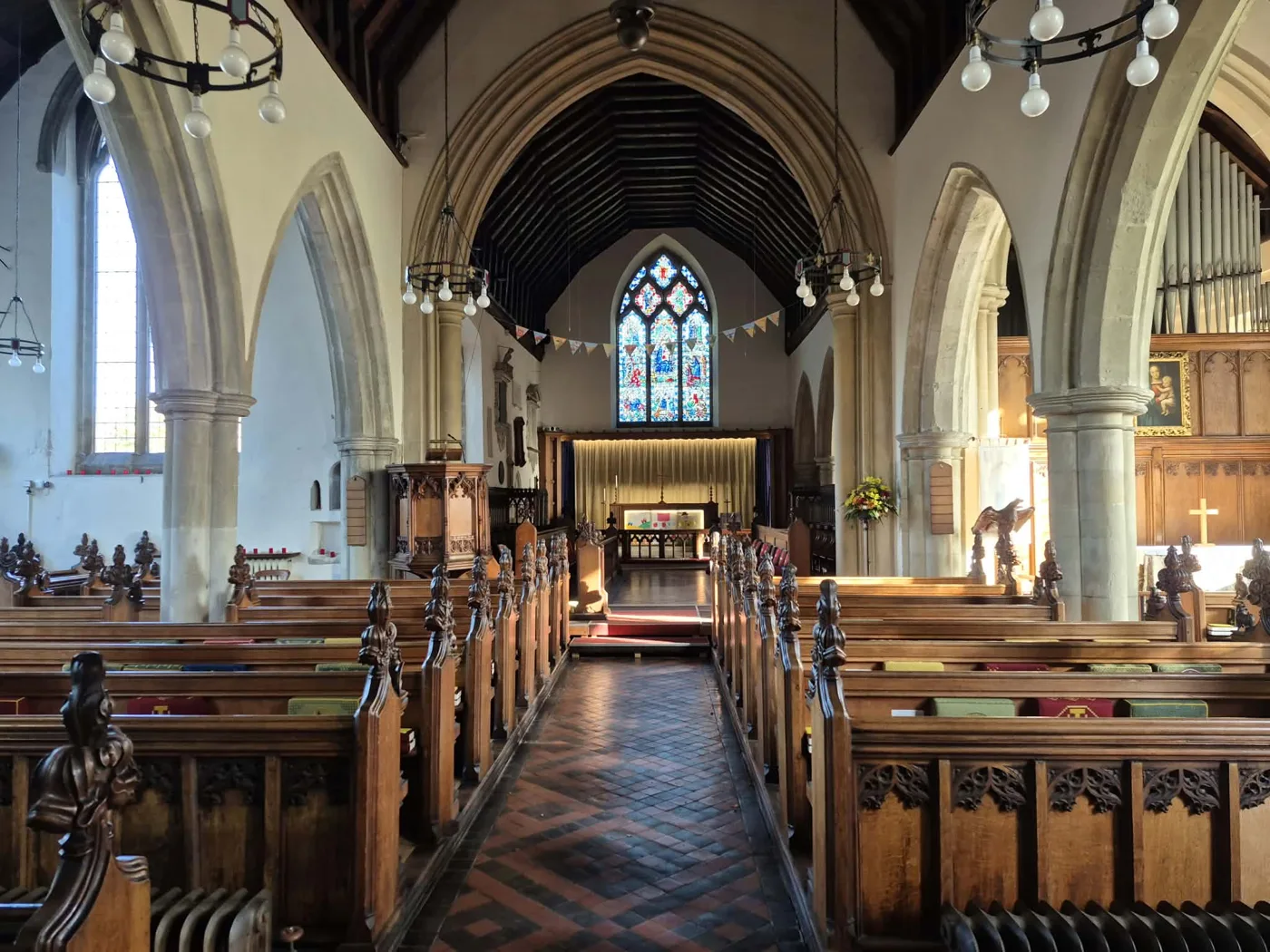
The discovery took place at the Church of St John the Baptist in Danbury, a few miles east of Chelmsford, during preparations for the burial of a local woman, Frances Fytche.
A lead coffin with no name
While digging in the north aisle, the workmen uncovered a large stone slab approximately thirty inches beneath the floor. Below it lay a lead coffin, with no inscription or anything to indicate who might be buried inside.
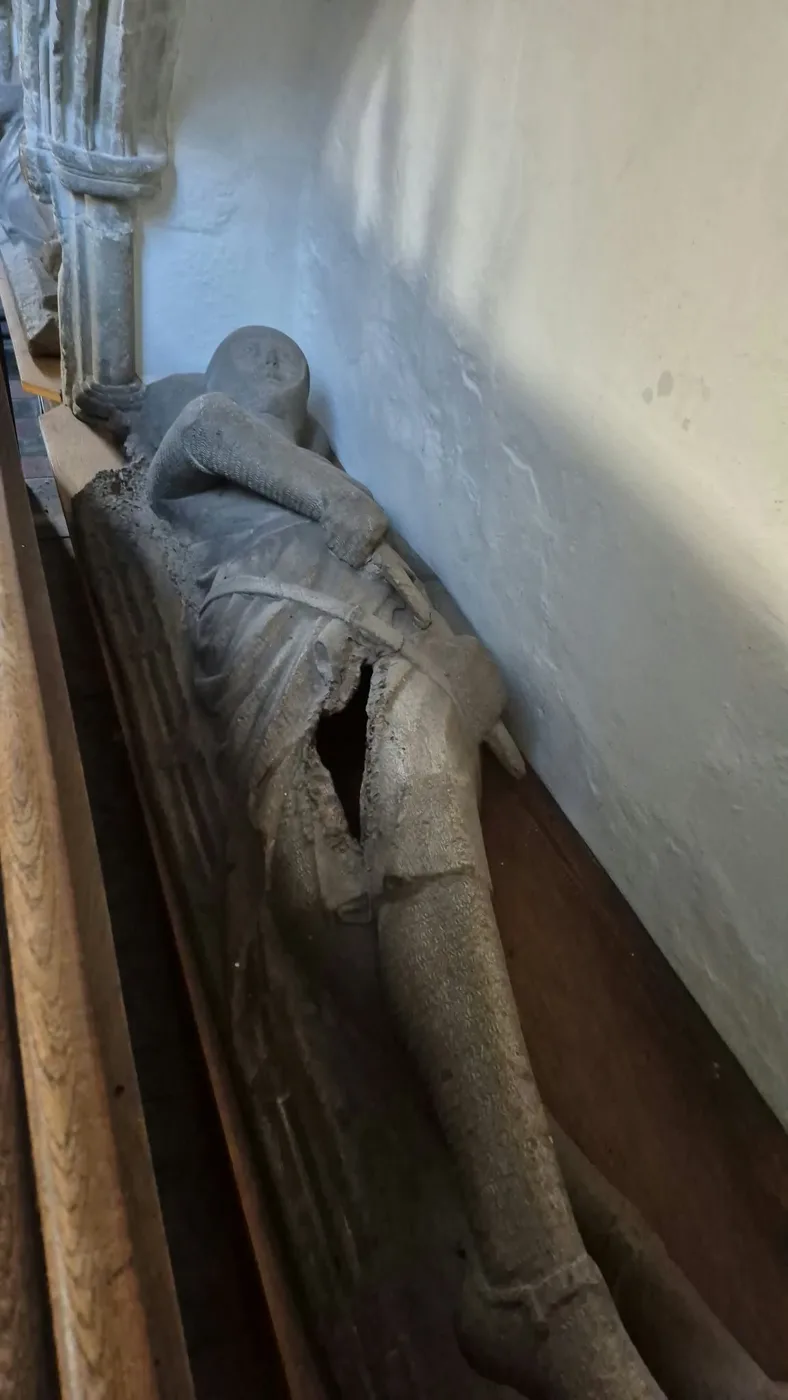
The location was particularly intriguing. Nearby stood a medieval wooden effigy depicting a knight in armour, leading those present to wonder whether they had stumbled upon the remains of the man represented by the carving.
The rector, the Reverend Mr De L’Angle, and churchwarden Lewis Densey Fytche were consulted, and a decision was made to open the coffin.
A local physician and antiquarian, Dr Gowor of Chelmsford, was invited to attend, although other commitments apparently prevented him from being present. Nevertheless, the examination went ahead.
When the lead coffin was opened, another coffin made of elm was discovered inside. Beneath that was a further covering, sealed with a thick, dark, resinous substance.
Carefully removing this final layer, those gathered were confronted by a remarkable sight. Instead of the skeletal remains they might have expected, they found the body of a man in an astonishing state of preservation.
According to those present, his flesh was still firm, his teeth were intact, and he wore a linen garment decorated with a narrow strip of lace. Although parts of the face and throat had deteriorated, much of the body appeared remarkably well preserved.
The witness who tasted it
The explanation seemed to lie in the unusual liquid surrounding the remains.
According to an account left by a Mr T. White, who witnessed the examination, the substance resembled mushroom ketchup, a familiar eighteenth-century condiment quite unlike the tomato sauce we know today.
And this is where the story takes a particularly bizarre turn. White explained that he had no sense of smell and, being curious about the mysterious liquid, decided to taste it.
He described its flavour as aromatic, somewhat resembling ketchup and the pickle of Spanish olives.
Quite what possessed him to sample the contents of a centuries-old coffin is another mystery altogether.
White also described plant material within the liquid, including what appeared to be flowers and herbs. These details only added to the remarkable nature of the find, and the story would eventually become associated with the memorable name of the Pickled Knight of Danbury.
So who was he?
The Church of St John the Baptist contains three medieval wooden knight effigies, remarkable survivors from the Middle Ages.
Carved in wood rather than stone, the figures depict armoured knights lying in repose. Their armour and other details have attracted the attention of historians and visitors for generations.
The effigies have traditionally been associated with the St Clere family, prominent local landowners with connections to Danbury during the medieval period.
Given the position of the coffin beneath one of these monuments, it was understandable that those present in 1779 believed they might have discovered the remains of a medieval knight.
Over the years, suggestions of connections with the Crusades and the Knights Templar have also become attached to the story. However, there is no conclusive evidence establishing the man’s identity, and the precise circumstances of his burial remain uncertain.
Written down at the time
What makes this account particularly fascinating is that it was recorded long before it became a familiar piece of Essex folklore.
An eighteenth-century newspaper report describing the discovery was preserved in the parish records, while Mr White’s observations were subsequently reproduced in antiquarian accounts.
Following the examination, the coffin was reportedly sealed again and returned to its resting place.
More than two centuries later, the mystery remains. Today, visitors to the Church of St John the Baptist can still see the medieval wooden effigies that helped inspire speculation about the discovery.
Whether the preserved man really was one of Danbury’s medieval knights may never be known. But few Essex historical mysteries can boast quite such an unusual eyewitness account.
And perhaps it’s fortunate that modern historians generally prefer examining old documents to tasting the contents of ancient coffins.
About the author
Richard Clements is an Essex-based historical researcher and writer known as The History Alchemist. Through his monthly features for The Chelmsford Times, he explores the forgotten stories, unusual discoveries and enduring mysteries of Chelmsford and the surrounding Essex countryside. Discover more at thehistoryalchemist.com.
Have your say