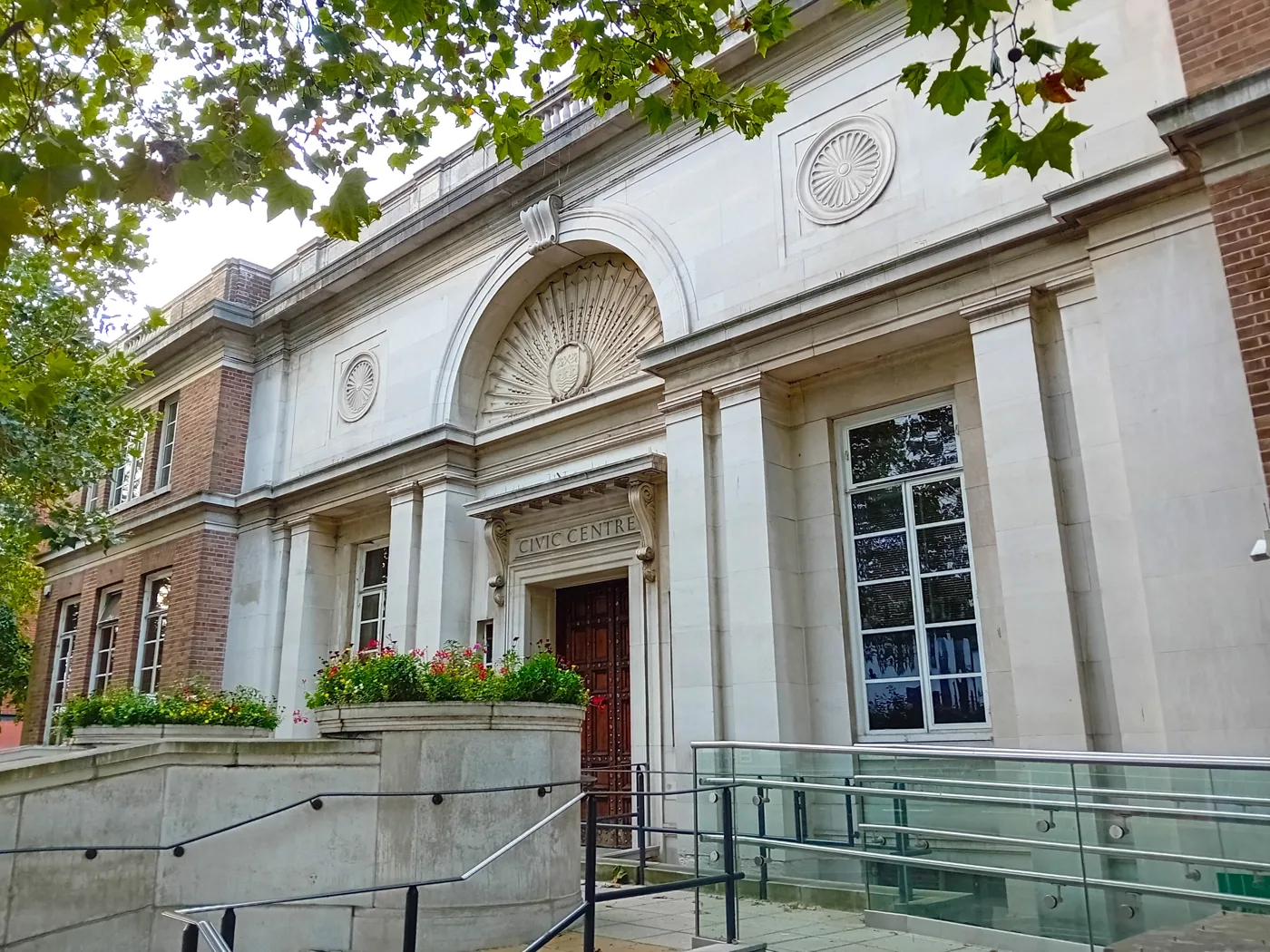

Inspectors sit at the Civic Centre on 10-12 and 17-19 November and 1-3 December, live-streamed. First test: 1,210 homes a year against a need figure of 1,433.
Public hearings into Chelmsford’s new Local Plan start at 10am on Tuesday 10 November at the Civic Centre on Duke Street. Two government-appointed inspectors will spend up to nine days testing whether the plan for 22,990 homes between 2022 and 2041 is sound. Anyone can watch from the public gallery or online (Chelmsford City Council, 6 October 2026).
The hearing days are:
- Tuesday 10 to Thursday 12 November
- Tuesday 17 to Thursday 19 November
- Tuesday 1 to Thursday 3 December, with 2 and 3 December held in reserve
Sessions run from 10am, with afternoon sessions from 2pm, in the Council Chamber at the Civic Centre, Duke Street, CM1 1JE. The council’s formal notice says the sessions will be live-streamed and that details of how to watch will go on its examination page, www.chelmsford.gov.uk/lp-examination (Regulation 24 notice, 24 September 2026).
The inspectors are H Baugh-Jones and R Morgan, appointed by the Secretary of State. An independent programme officer, Annette Feeney, runs the process between them and everyone taking part. Her email is annette.feeney@chelmsford.gov.uk.
Who gets to speak, and by when
You cannot make new comments on the plan now. The people with a right to appear are those who asked for a change to the plan during either of the two Regulation 19 consultations: 4 February to 18 March 2025, and 20 November 2025 to 8 January 2026.
For them, the deadline is close. The inspectors’ guidance note gives noon on Wednesday 21 October both to confirm that they want to appear and to submit any hearing statement (Examination guidance note, 28 September 2026). Anyone who does not contact the programme officer by then is assumed not to want a seat.
The note also explains what the hearings are not. They are round-table discussions led by the inspectors, with no formal presentation of cases and no cross-examination. One person per representor. Written comments carry the same weight as anything said in the room, so a resident who objected in 2025 and does nothing more will still have their objection considered. The final programme is due after 21 October.
What is on the table, day by day
The inspectors published a draft programme on 2 October. The order is provisional (Draft hearing programme, 2 October 2026).
| Day | Morning | Afternoon |
|---|---|---|
| Tue 10 Nov | Introduction, council's opening statement, legal and procedural requirements, cooperation with neighbouring councils | Strategic priorities and spatial principles |
| Wed 11 Nov | Housing provision and the spatial strategy | Planned infrastructure |
| Thu 12 Nov | Transport, then the right type of homes | The right type of homes, continued |
| Tue 17 Nov | Site selection and Growth Area 1, central and urban Chelmsford | Growth Area 2, north Chelmsford |
| Wed 18 Nov | Growth Area 3, the Chelmsford Garden Community | Remaining Growth Area 3 sites |
| Thu 19 Nov | Centres and community facilities, then sustainable development | Sustainable development continued, then design |
| Tue 1 Dec | Countryside and the historic environment | Natural environment and biodiversity, then monitoring |
| Wed 2 and Thu 3 Dec | Reserve | Reserve |
The first big question: how many homes
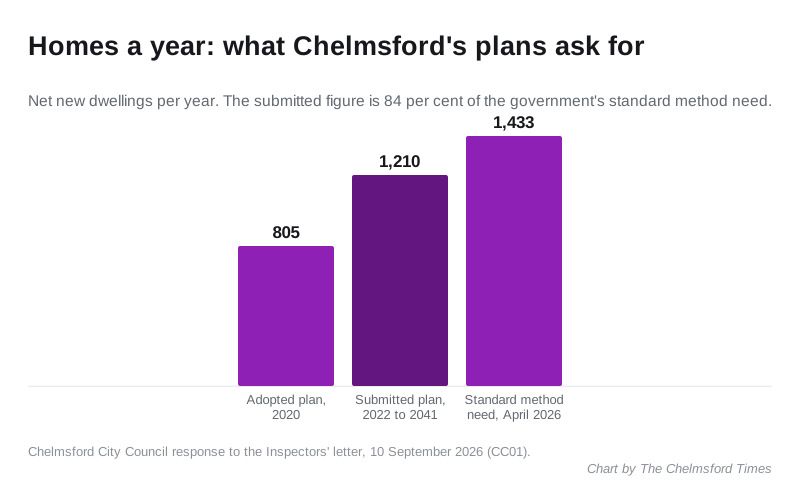
The inspectors’ questions open with the number that drives everything else. The plan asks for 1,210 new homes a year, which is 22,990 over the plan period. The government’s standard method says Chelmsford’s local housing need is 1,433 a year, and the inspectors want to know why the plan is lower (Inspectors’ letter, 20 August 2026).
The council’s answer, sent on 10 September, is that 1,210 is 84 per cent of the need figure, and the transitional rules for plans submitted before the new planning system let a council be examined on a figure of at least 80 per cent. It says it tested a higher option of 1,406 homes a year, 26,714 over the period, and found it performed worse on resources, strategic road capacity and certainty of delivery. Meeting the full figure would mean finding land for 4,237 more homes, new site allocations and, the council says, probably starting the plan again under the new system (Council response to the Inspectors, 10 September 2026).
The same response gives the record so far. The adopted 2020 plan asks for 805 homes a year. Against that, the council says it was 463 homes ahead at 31 March 2026, that delivery passed 1,000 homes in four of the years since 2013, and that it beat the 2025 Housing Delivery Test threshold by 10 per cent.
The inspectors’ questions also record that the council declared a housing crisis in February 2022, and ask whether the plan has enough flexibility if the big sites are slow to deliver (Matters, Issues and Questions, 28 September 2026).
The sites with questions against them
The same document lists what the inspectors want explained about individual allocations. The ones that touch most residents:
- The Chelmsford Garden Community, north east of the city. The adopted plan gave it around 3,000 homes and 45,000 square metres of office space. The submitted plan gives it around 5,569 homes and about 9 hectares of employment land. The inspectors ask what justifies the increase, whether the Beaulieu Access Package is funded and when it arrives, and whether a target of 60 per cent of journeys by walking, cycling and public transport is realistic. Our story on the road being built through the site has the background.
- Great Leighs, three growth sites. The inspectors ask why the older persons’ housing on one site has dropped from 250 homes to 190, how the three sites will be developed together, what schools they need, and whether Great Leighs Water Recycling Centre can be expanded in time.
- Writtle and land north of Galleywood each have their own set of questions.
- Boreham, where the Waltham Road employment area is questioned, and employment land at Little Boyton Hall Farm and Hammonds Farm.
- North of South Woodham Ferrers and Danbury, both strategic growth sites.
- North of Broomfield has no additional questions.
What happens after the hearings
There are three possible results: the plan is sound; it is not sound but can be fixed by main modifications; or it is not sound and cannot be fixed. The inspectors will write a report on the legal and soundness issues and a schedule of any modifications. Those go to a full meeting of the city council and then out for public consultation before anything is adopted. The council has not published a target adoption date, and the inspectors have asked it for one.
What it means for you
- If you objected in 2025 and want to be in the room, act by noon on 21 October. Email the programme officer and say which session. If you do nothing, your written objection still counts.
- If you did not comment, you cannot now. The next chance is the consultation on main modifications after the inspectors report.
- Watch it. The sessions are public and streamed, and the housing number session on 11 November is the one that decides the scale of everything else.
- Until the plan is adopted, the old one is wearing thin. Chelmsford cannot show five years of housing land against the new target, so speculative applications get an easier ride. We explain that in our planning news page, which lists every live major application.
- Nothing changes on the ground yet. No site is approved by being in the plan. Each one still needs a planning application, which you can comment on through the council’s portal.
Sources
- Chelmsford City Council, 6 October 2026: Local Plan Examination hearings set to begin in November for the dates, the venue and the stages after the hearings.
- Notice of commencement of hearings, 24 September 2026 for the inspectors, the start time, the address, the live stream and the programme officer.
- Examination guidance note, 28 September 2026 for the 21 October deadline, who may appear, the consultation dates and the format.
- Draft hearing programme, 2 October 2026 for the day-by-day table.
- Matters, Issues and Questions, 28 September 2026 for the housing crisis declaration, the Garden Community and Great Leighs questions and the site list.
- Inspectors’ letter, 20 August 2026 and the council’s response, 10 September 2026 for 1,210, 1,433, 84 per cent, 22,990, 26,714, 4,237, 805, 463 and the delivery record.
- Latest news and timeline for the submission on 5 June and the appointment of inspectors on 26 June 2026.
Have your say